Showing posts with label Essay. Show all posts

Monday, March 4, 2013

Old Dog, New Tricks: The Case of ELEMENTARY

CBS chose to update Arthur Conan Doyle’s Sherlock Holmes to the modern world by placing him in New York City with a female Dr. Watson as his guide. This twist on an old standard allowed gender politics and trans-Atlantic culture shock to take Doyle’s original formula in a new direction, and to play with the fish out of water scenario faced by a Victorian detective who is cryogenically frozen until the 1980s; this was The Return of Sherlock Holmes, a CBS TV movie that aired in 1987. Six years later CBS tried again with Sherlock Holmes Returns, which saw the detective awoken from suspended animation by an earthquake in San Francisco. In both cases, the modern world is presented as the real world, where Sherlock Holmes has been made famous by Doyle’s writing. Neither were successful, and modern-set Sherlock Holmes took a backseat to more traditional adaptations, such as Sherlock Holmes and the Baker Street Irregulars (2007) starring Jonathan Pryce. Sherlock Holmes (2009) starring Robert Downey Jr. and Jude Law brought a new angle on the character by turning him into an action hero at the heart of a Hollywood blockbuster, but the Victorian setting remained. It was Sherlock (2010-), a BBC series starring Benedict Cumberbatch and Martin Freeman, that first brought the characters into the modern world in a way audiences wanted to watch. The success of the BBC inspired CBS to give it one more try. Lucy Liu followed Alec Baldwin’s lead to reinvigorate a waning film career by headlining a television series, and CBS chose Cumberbatch’s Frankenstein co-star Jonny Lee Miller to play their take on the modern detective. Dr. Watson is an American surgeon. Holmes is a recovering addict. Cryogenics and meta-fictional Arthur Conan Doyle are nowhere to be seen. In Elementary, series creator Robert Doherty has taken the bare bone structure that has allowed these characters to endure and injected the dark humor, liberal politics, and five-act plots of other CBS procedurals like CSI. The result is the entertaining illusion of new material, or what the tagline for the premier summarized as, “New Holmes. New Watson. New York.” (IMDb)

An American one-hour drama, like Dexter or CSI: New York, adheres to an act structure, as all mainstream drama does. Stage plays favor two acts. Many Hollywood films contain three acts. Elementary is divided into five. Act one (a few minutes shorter than the rest) establishes both the mostly-serious main plot and the sometimes-comical subplot, and it ends with the title sequence. Act two expands on the details of the main plot, ending with a complication. Act three repeats the structure of act two. Act four deals with the fallout of the complications and ends with either a surprise reveal or another murder. Act five wraps up the main plot via Sherlock’s outside-the-box thinking and Watson’s medical knowledge, and the subplot is resolved with a relationship-building moment between Sherlock and Watson, which sometimes reveals details of Sherlock’s mysterious personal history. In this way the predictable act structure reinforces expectations of character development, and establishes a pattern for the writers to develop the characters over the entire series. When questions about Sherlock or Watson remain at the end of the episode the audience does not feel cheated like they would at the end of a film because they know that the pattern will repeat in the next episode. The predictable act structure is central to the dramatic language writers use to communicate stories to audiences, and Elementary follows that tradition in every way.

A second key to dramatic language is in character archetypes. Sherlock Holmes is a character that the audience can instantly recognize; he is intelligent, witty, highly capable at logical thinking, very good at his profession, and has one debilitating personal flaw. Like an act structure, he is a familiar form that the writers can hang new ideas on. He can be written to be a bitter doctor (House), a rule-driven serial killer (Dexter), an obsessive-compulsive former cop (Monk), an empathetic FBI investigator (Hannibal) or a recovering-addict detective. Part of the Sherlock archetype is the relationship to Dr. Watson. Joan Watson is an upstanding professional, she is an expert in her field, but she is often baffled by the thought processes that drive Sherlock Holmes. She is an accomplished surgeon, which is often key to her part in the solution of a mystery. During the series’ lighter moments these two characters operate as a double act, like George Burns and Gracie Allen or Dean Martin and Jerry Lewis. In terms of archetype, Watson is the “straight man.” The comedy element of the series is given more or less weight depending on the seriousness of the main plot. In “Possibility Two” Watson is tested by Sherlock by being sent to a shady laundromat, and her lighter story balances the relative seriousness of the main plot. In many ways the comedy of Elementary is based on the absurdity provided by Sherlock’s personality and methods being reflected against Watson’s “normalcy.”

Absurdity, at least in dramatic narratives, can fall into a gray area for believability. Rabid fans of a series or filmmaker sometimes forgive awkward plotting, contradictions, and deus ex machina endings, but venomous critics pounce on the same moments to dismiss the work as amateurish. In the case of a deus ex machina, where a sudden reversal of fortune comes as if by “an act of God”, the audience will feel cheated unless there is a value in ignoring it. Screenwriting lecturer Robert McKee calls the deus ex machina an “insult to the audience… because it is a lie.” (358) But these contrived plots can be made palatable in a few different ways. Jurassic Park, for example, ends with the T-Rex appearing from no where to save the main characters from a velociraptor; had it not come at the end of a very tense action scene with spectacular CGI, the audience would have cared about the absurdity.

Elementary uses the established genius of Sherlock Holmes to hide absurd plotting from the audience. In "The Deductionist," the fifth act confrontation is reached when Sherlock tracks the killer to his hideout by triangulating radio signals he heard in the background of the killer's call to the police. Comparing signal strengths and recognizing a "microbroadcaster" Sherlock is able to deduce the exact location, where he lays in wait for the killer to return. The fact that the killer was scanning radio stations while talking to the police is explainable and ironic; he was trying to cover up background noise that would betray his location. The fact he was near to a "microbroadcaster" was convenient, but not unreasonable in New York City, which has 112 registered broadcasters (radio-locator). However, the fact that Sherlock was able to recognize and triangulate the stations is only an acceptable solution because Sherlock Holmes is an established genius. In “The Red Team” Sherlock allows himself to be taken hostage by a military advisor who is planning to murder his former colleagues who know the details of a dangerous plan. In the climax Sherlock confesses that he has already written down the details of the plan, which makes any attempt to cover it up through murder pointless. It turns out that he was bluffing, and only through his super-human intellect did he manage to figure out the plan himself while being held captive. The absurdity in this episode is that Sherlock is able to calculate in a few minutes the top secret military strategy that took several experts months to invent.

With the plot structure of CSI and the archetype characters of Arthur Conan Doyle, Elementary is a revitalized, “new” take on old material, and it is part of a current trend in television. Bates Motel takes the narrative established in Robert Bloch’s Psycho, made famous by Alfred Hitchcock’s film, and sets the originating events in motion in the modern world. Hannibal takes the novels of Thomas Harris and elaborates on the previously unwritten story of Will Graham and Hannibal Lecter’s relationship before Red Dragon. House of Cards is an American adaptation of a British political series. Battlestar Galactica: Blood and Chrome is a prequel series to the remake of Battlestar Galactica. All of these new shows have recycled some or all of the characters, structures, and plots of previous work. This is not surprising, but it is indicative of a larger issue facing the film and television industries.

When television made multiple channels of visual media available to an audience in their living room, the film industry was forced to respond by creating theatrical experiences that television could not match. The technicolor boom of musicals followed by the breakdown of the Hayes Code regulations meant that movie theaters could offer content that was both visually more impressive and thematically more adult. (Cousins 223) New media based on internet streaming has further expanded television’s reach to the audience, and the film industry has responded with expanding on digital technologies like motion capture and pushing for more content in 3D.

Alongside the film industry’s reaction to television stealing its audience, the television industry is faced with a pressure to meet the needs of its larger audience. Living room access demanded constant new content, and the existence of different channels multiplied the demand. Now that internet streaming has made on-demand television content available on every smartphone and tablet, the content requirement has increased. Filling the demand depends on the industry’s creative side, which comes up against the reality that creating a piece of original programming, marketing an unknown actor, and keeping the audience’s attention are difficult obstacles. Removing one or more obstruction by recycling “old” concepts, casting established actors, and falling back on reliable plot devices increases a series’ chance of success. Elementary has succeeded because it does all three.

Few established dynamics are as familiar as Holmes and Watson. Arthur Conan Doyle first introduced Sherlock Holmes in 1888, and he has been adapted and rewritten ever since. (Milos-Plunket) Lucy Liu has 78 titles on her IMDb page going back as far as 1991, and was paid $5.5 million for her role in Kill Bill: Vol. 1. She was an established film star when she took the role of Joan Watson, and she follows other established actors like Ashley Judd (The Missing), William H. Macy (Shameless), Glenn Close (Damages), Jeremy Irons (The Borgias), and Dustin Hoffman (Luck) in moving to television. And the plots of Elementary, although tailored to fit the characters, are standard television mysteries that could have appeared in any of the other series fitting the amateur detective-duo mould.

The idea to take old concepts and give them “new” twists is as old as storytelling; the ancient Greeks retold the same stories in different ways; Shakespeare based several plays on past works; even Alfred Hitchcock remade his 1934 film The Man Who Knew Too Much with Jimmy Stewart in 1956. (IMDb) The BBC reinvented Sherlock Holmes and Dr. Watson for the modern world in 2010, and CBS has followed their lead, which has resulted in one of the most popular new shows of the 2012 Fall season (Huff Post). In “Snow Angels,” Doyle’s Miss Hudson is re-introduced as a transgendered woman; this is only the most recent example of how the series is combining current trends, such as including LGBT characters, with established forms. Until the television industry is so flush with talent and original content that the audiences don’t have enough hours in the day to take it in, there will be a pattern of rewriting old forms, attaching new performers to the surface, and reciting old plots. And the television industry will never be that flush with talent. The upside, from a critical point of view, is that even working within these “old” forms, creativity can present the entertaining illusion of something “new.”


Works Cited

Cousins, Mark. The Story of Film. London: Pavillion Books, 2006. Print.

Huff Post. Elementary’ Renewed For Season 2 Along With 13 Other CBS Series. Huffington Post. 28 March 2013. Web. 10 April 2013. <http://www.huffingtonpost.com/2013/03/27/elementary-renewed-season-2-cbs_n_2965937.html>

IMDb. Lucy Liu (I). Internet Movie Database. April 2013. Web. 10 April 2013. <http://www.imdb.com/name/nm0005154/bio>

IMDb. Sherlock Holmes (Character). Internet Movie Database. 2013. Web. 10 April 2013. <http://www.imdb.com/character/ch0026631/>

Jurassic Park. Dir. Steven Spielberg. Perf. Sam Neill, Laura Dern, Jeff Goldblum, Richard Attenborough. Universal, 1993. DVD.

McKee, Robert. Story. New York: Harper-Collins, 1997. Print.

Milos-Plunket, Andrea. The Sir Arthur Conan Doyle Literary Estate. Andrea Milos-Plunket. 2000. Web. 10 April 2013. <www.sherlockholmesonline.org>

“Possibility Two.” Elementary. Dir. Seith Mann. Perf. Jonny Lee Miller, Lucy Liu. CBS. Global, Vancouver, 21 Feb. 2013. Television.

Radio-Locator. Radio Stations in New York, New York. Theodric Technologies LLC. 2013. Web. 10 April 2013. <http://www.radio-locator.com/cgi-bin/locate?select=city&city=New%20York&state=NY>

“Snow Angels.” Elementary. Dir. Andrew Bernstein. Perf. Jonny Lee Miller, Lucy Liu. CBS. Global, Vancouver, 4 April 2013. Television.

“The Deductionist.” Elementary. Dir. John Polson. Perf. Jonny Lee Miller, Lucy Liu. CBS. Global, Vancouver, 3 Feb. 2013. Television.

“The Red Team.” Elementary. Dir. Christine Moore. Perf. Jonny Lee Miller, Lucy Liu. CBS. Global, Vancouver, 31 Jan. 2013. Television.

Monday, July 23, 2012

Kubrick and Freud

The id, Freud’s name for subconscious desires, and the superego, which is the subconscious limiting of those desires to conform to society, are weighed by the conscious ego. This balancing act of fantasy and repression is what Freud considered the baseline of someone’s personality. With a career spanning fifty years and a filmography that crosses all genre boundaries, Stanley Kubrick achieved status as a master filmmaker with particular skill in bringing to the screen stories and personalities that defy single interpretations. Through open narratives and careful use of the alienation effect Kubrick’s films remain compelling reasons to apply psychoanalytical theory to modern ideas of fantasy, personality, and desire in both films and real life.

Dr. Strangelove, or: How I Learned to Stop Worrying and Love the Bomb (1964) was the critical and commercial success that allowed Kubrick to make his ambitious science fiction masterpiece 2001: A Space Odyssey (1968). Eyes Wide Shut (1999), based on Arthur Schnitzler’s Dream Story, was originally intended by Kubrick to be his follow up to 2001, but he pursued other projects until thirty years later when it became his final film. Eyes Wide Shut is an overtly sexual drama while Dr. Strangelove is, on its surface, a cold war satire. Both films use sexual fantasy and repression - a pendulum swing of inner desire and social conformity - to expand on their abstract themes; Eyes Wide Shut explores modern theories of love and sexuality while Dr. Strangelove explores the madness of the cold war.

The “odyssey” that Dr. Harford (Tom Cruise) goes on in Eyes Wide Shut is triggered by his wife Alice’s (Nicole Kidman) confession to fantasizing about an extra-marital affair. This is a blow to his self-esteem and his monogamous security. In response, Dr. Harford explores his own desires and fantasies as he agonizes over the imaginary infidelity. Eventually he finds his way back to his wife and to the discovery of a new interpretation of their sexual relationship. The trigger of the female fantasy leads to a series of confrontations that interchange sex with death, commerce, and love (Deleyto 31).


A similar, but inverted, connection of fantasy and nightmare occurs in Dr. Strangelove. In a film where the only female character is a secretary and sexual partner named Miss Scott (but only addressed by Gen. Turgidson as “Baby”), the male characters are given free rein to plan their fantasies. When the doomsday device has been triggered and the nuclear apocalypse is upon them, the men in the war room listen to the Nazi Dr. Strangelove and his plan for them to survive in mine shafts with a ratio of ten women for each man:

I hasten to add that since each man will be required to do prodigious service along these lines, the women will have to be selected for their sexual characteristics, which will have to be of a highly stimulating nature.
- Dr. Strangelove (Peter Sellers)

This new world imagined by the doctor is a genetically pure culture, a Nazi fantasy, and it is such an exciting idea that the wheelchair-bound Dr. Strangelove stands up (becomes erect) and declares, “Mein Fuhrer! I can walk!” But the male fantasy of this future would be less-than-ideal for its female population. As much as Eyes Wide Shut reveals a man’s sexual nightmare resulting from a woman’s fantasy, Dr. Strangelove shows a woman’s nightmare resulting from male fantasies.

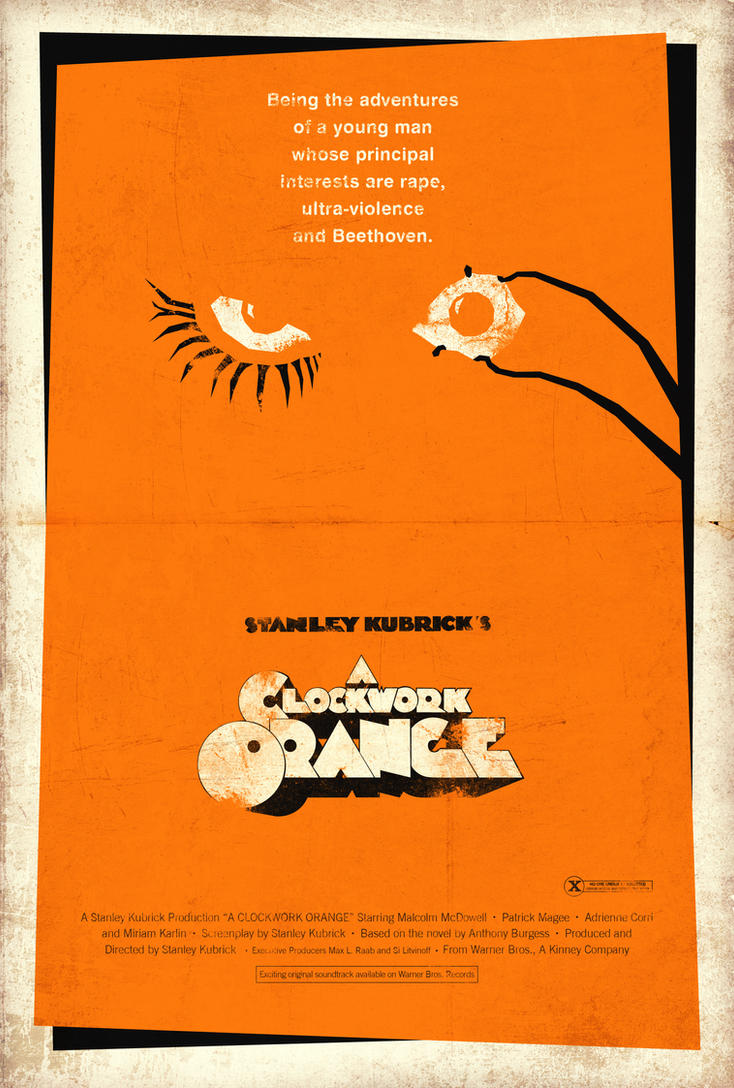
A pivotal film in Kubrick’s career was his follow-up to 2001: A Space Odyssey, which was an adaptation of Anthony Burgess’s novel about anarchy and social conditioning through science, A Clockwork Orange (1971). The main character, Alex (Malcolm McDowell), is the psychotic leader of a gang of violent teenagers. His life is completely unrestricted, and he satisfies every urge he has through violence, sex, murder, and music. When he is betrayed by his gang, Alex is sent to prison and then into a rehabilitation program. Through chemical psychotherapy, Alex develops a false superego, a debilitating nausea that appears when he comes into contact with his socially unacceptable desires. It is this treatment that has turned him into “a clockwork orange,” which leaves him with a natural exterior but with nothing underneath except the psycho-chemical constraints. When Alex is returned to his violent self at the end it is presented as a positive event because it means that - although he is violent and destructive - he is back to being human.


Freudian characters like Alex populate many of Kubrick’s films. In Eyes Wide Shut, Dr. Bill Harford is a man who, unlike Alex, appears to be in complete control of his emotions and desires. When his wife accuses him of lusting after his female patients, Bill reacts calmly and clinically. He explains that there is a female nurse present, that the situation is completely free of any romantic elements, and then he tries to calm her down by diagnosing the source of her anger: “Let’s just relax, Alice. This pot is making you aggressive.” The doctor’s veneer of honest professionalism is undermined in a number of scenes. For example, he reassures his wife that he would never lie to her in one scene, but in the next he lies about his reasons for staying out late. Bill is driven by his subconscious desires or a sense of guilt for much of the film, and it is only in short moments, such as when he leaves the prostitute’s apartment before having an affair, that his conscious sense of responsibility drives him away from making mistakes.

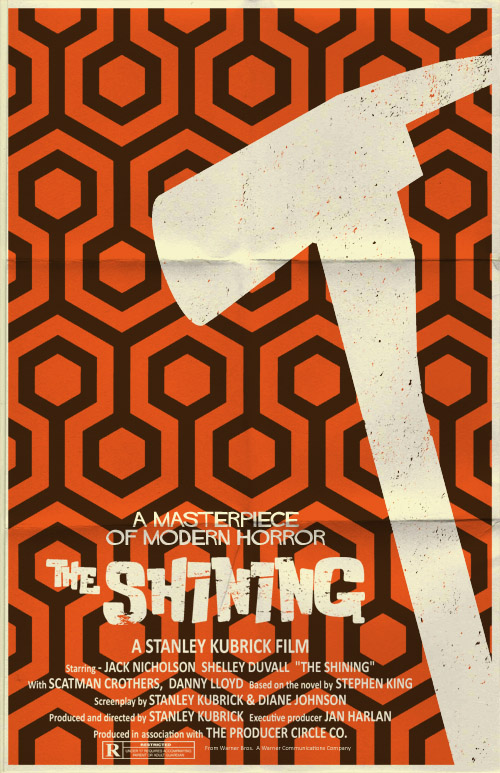
Another important character representing unleashed subconscious desires is Jack Torrence (Jack Nicholson), the familicidal caretaker in The Shining (1980). At the start of the film, Jack has restrained himself by repressing his destructive urges, such as drinking, and is introduced as a happy father, husband, and writer. His dark, unrestrained side is hinted at when his wife tells a doctor of the time when Jack dislocated his son’s shoulder in a moment of rage. When the family moves into the Overlook Hotel, Jack’s unrestrained self begins to take over. As with all of Kubrick’s films there are various ways to interpret Jack’s slow decline into madness. The “evil” hotel, disturbed ghosts, schizophrenia, or cabin fever are all defendable explanations for Jack’s psychosis; however, the evidence for his decline is rooted in the Freudian tug-of-war that Kubrick shows Jack going through. His hallucinations (or visits from ghosts) are slowly developed until the final chase when all the horrors of the hotel are revealed. Jack does not step away from reality in a single moment, and his growing frustration with his wife and distance from his son are mixed with moments of tenderness or protective behaviour. The character arcs in The Shining were so central to Kubrick’s story that he insisted on filming in sequence so the actors would not be forced to revert to an earlier, more restrained point of view (Duncan 166).

Although the central character representing the audience’s point of view in The Shining is Danny, the film’s main character is the killer, Jack. In A Clockwork Orange the main character is the psychotic Alex. These extreme personalities are not alone in Kubrick’s filmography. Many of his films include central characters with extreme personalities like the murderous computer HAL 9000 in 2001, the pedophiliac Professor Humbert Humbert (James Mason) in Lolita (1962), the amoral social-climber Redmond Barry (Ryan O’Neal) in Barry Lyndon (1975), or the ensemble of broken eccentrics in Full Metal Jacket (1987). These characters illustrate Freud’s theory of personalities resulting from the id/ego/superego balance as much as they show Kubrick’s careful attention to character development.

The scene at the center of both Eyes Wide Shut and Schnitzler’s Dream Story is a masked “orgy” in a country mansion infiltrated by the main character. In the film version, Dr. Harford’s curiosity is peaked by an old friend who claims to play piano blindfolded for a secret group. Using what little his friend tells him, the doctor gets an appropriate costume and hires a taxi to get to the mansion. The masked characters move slowly, never speak, and remain anonymous throughout the strange sequence. When Dr. Harford is discovered he is made to remove his mask and expose his identity, which in the book the character thinks would be far worse than to be naked when everyone else is clothed. This humiliation is interrupted by a masked woman who “saves” him by volunteering to take his place, and this comes at the end of an evening that included several insults to Dr. Harford’s perception of his own masculinity. While walking the streets the doctor is physically assaulted by a group of frat boys who throw homophobic insults as they walk away, which bothers the doctor and leads directly to his nervous acceptance of a prostitute’s invitation to her home. Dr. Harford’s sexual desire or curiosity leads him through the first half of the film until his discovery at the party. In the second half it is his curiosity about the night before that continues to drive him to seek out answers. What he finds is that the prostitute he nearly slept with is HIV positive, that the woman who “saved” him has died mysteriously, and that his friend, the piano player, has disappeared from his hotel. Each of these incidents are taken by Dr. Harford to be his fault, and his building guilt drives him on to seek more answers. Despite warnings from the secret society behind the masked party, Dr. Harford continues his quest until he is confronted by an old friend who is revealed to have witnessed his unmasking. The masked party is the turning point where Dr. Harford’s character shifts from following his desires (his id) to following his guilt (his superego). Only when both have been taken to the extremes does Bill finally break down, weep, and confess everything to his wife.


In confessing to his wife, just as she had confessed to him at the start, Dr. Harford comes to a place of balance. The final scene shows the couple in a toy store with their daughter, shopping for Christmas, and their final discussion opens with Bill asking his wife, “What do you think we should do?” She slowly answers, “Maybe I think we should be grateful. Grateful that we’ve managed to survive through all of our adventures. Whether they were real or only in a dream.” Neither of them has a complete answer. They cannot confirm what the purpose of their story has been, how they will handle the future, or if they will remain together. But the fact that they are together, shopping with their daughter, talking to each other, and confessing their desires and concerns show the psychological balance they have come to.

Bill tries to affirm his commitment, “Forever,” he says, but she replies, “Let’s not use that word. It frightens me.” At this point the film, like the novel, comes to Freud’s conclusion that a balance of desire and guilt is necessary for a healthy personality, but that nothing can be predicted to last “Forever.” Kubrick, however, goes one step further. In the final seconds of the film the exchange between Bill and Alice expands the argument to include a balance of psychological desire with physical expression, which is Kubrick’s truly modern addition to Schnitzler’s story and Freud’s theory:

Alice: “But I do love you, and you know there is something very important that we need to do as soon as possible.”
Bill: “What’s that?”
Alice: “Fuck.”
- Final lines of Eyes Wide Shut

Despite working as a director for over fifty years, Stanley Kubrick only wrote and directed twelve feature films. The extent to which his films can be reinterpreted and analyzed is a testament to Kubrick’s skill, ambition, and understanding of the psychological effects of film. It is fitting that Kubrick’s final film was based on a novel by the Viennese writer Arthur Schnitzler, whose work was highly respected by Sigmund Freud for its psychological insight (Cocks 36). Many have argued that Kubrick’s slow working method deprived the world of further Kubrick films, and even Stanley Kubrick himself expressed dismay at failing to create more. But, in Stanley Kubrick: A Life in Pictures (2001), Martin Scorsese responded by saying, “I wish he’d made more, but these are enough. Because there is so much in each one… It’s like watching a different movie every time you see it.”


Works Cited

2001: A Space Odyssey. Dir. Stanley Kubrick. Perf. Keir Dullea, Gary Lockwood, William Sylvester, and Douglas Rain (voice). MGM, 1968. Blu-ray.


A Clockwork Orange. Dir. Stanley Kubrick. Perf. Malcolm McDowell, Patrick Magee, and Michael Bates. Warner Brothers, 1971. DVD.


Barry Lyndon. Dir. Stanley Kubrick. Perf. Ryan O’Neal, Marisa Berenson, and Patrick Magee. Warner Brothers, 1975. DVD.


Cocks, Geoffrey. "Stanley Kubrick's Dream Machine: Psychoanalysis, Film, and History." The Annual of Psychoanalysis 31 (2003): 35. Print.


Danckwardt, Joachim F. "From Dream Story (Schnitzler) to Eyes Wide Shut (Kubrick) from Identity through Meaning Formation to Identity through Excitation." The International Journal of Psychoanalysis 88.3 (2007): 735-51. Print.


Deleyto Alcalá, Celestino. “1999, a Closet Odyssey: Sexual Discourses in Eyes Wide Shut." Atlantis: Revista de la Asociación Española de Estudios Anglo-Norteamericanos 28.1 (2006): 29-43. Print.


Dr. Strangelove or: How I Learned to Stop Worrying and Love the Bomb. Dir. Stanley Kubrick. Perf. Peter Sellers, George C. Scott, Sterling Hayden, Slim Pickens, and James Earl Jones. Columbia, 1964. DVD.


Duncan, Paul. Stanley Kubrick: The Complete Films. Koln: Taschen, 2011. Print.


Eyes Wide Shut. Dir. Stanley Kubrick. Perf. Tom Cruise, Nicole Kidman, and Sydney Pollack. Warner Brothers, 1999. DVD.


Falsetto, Mario. Stanley Kubrick: A Narrative and Stylistic Analysis. Westport, Conn: Praeger, 2001. Print.


Full Metal Jacket. Dir. Stanley Kubrick. Perf. Matthew Modine, Adam Baldwin, Vincent D’Onofrio, and R. Lee Ermy. Warner Brothers, 1987. DVD.


Lolita. Dir. Stanley Kubrick. Perf. James Mason, Shelley Winters, Sue Lyon, and Peter Sellers. MGM, 1962. DVD.


Shining, The. Dir. Stanley Kubrick. Perf. Jack Nicholson, Shelley Duvall, Danny Lloyd, and Scatman Crothers. Warner Brothers, 1980. DVD.


Spartacus. Dir. Stanley Kubrick. Perf. Kirk Douglas, Laurence Olivier, Charles Laughton, Peter Ustinov, Jean Simmons, and Tony Curtis. Universal, 1960. DVD.


Stanley Kubrick: A Life in Pictures. Dir. Jan Harlan. Perf. Tom Cruise, Woody Allen, Martin Scorsese, Malcolm McDowell, and Sydney Pollack. Warner Brothers, 2001. DVD.


Helmetag, Charles H. "Dream Odysseys: Schnitzler's Traumnovelle and Kubrick's Eyes Wide Shut." Literature/Film Quarterly 31.4 (2003): 276. Print.


Schnitzler, Arthur. Dream Story (Traumnovelle). London: Penguin, 1999. Print.

Monday, April 9, 2012

The Psychiatrist in Popular Entertainment: Trust, Professionalism, and the Screwball Comedy

In a cross-section of Hollywood films and television shows that include psychiatrists as characters there is a clear division between two categories; the psychiatrist character is either trustworthy and professional or untrustworthy and out of touch. This division shows how psychiatrists, as fictional characters, are defined by their profession more than most. Like athletes, firefighters, and other doctors, psychiatrists are usually included only if their profession impacts the rest of the story. How their career impacts the story is contingent on their trustworthiness, which makes them dependent on other characters to show which category they are in. Considered in terms of the story genres in which they appear, the two primary genres for psychiatrists are character drama and screwball comedy. From The Fugitive (1993) to Frasier, the psychiatrist is a curiously divided archetype.

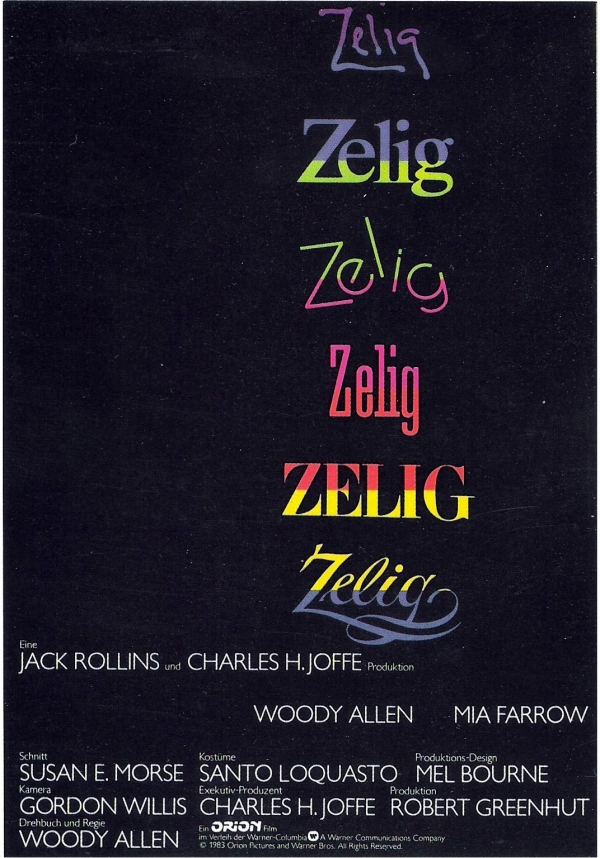
Films like Mr. & Mrs. Smith (2005), Psycho (1960), or Woody Allen’s Zelig (1983), include psychiatrist characters for narrative clarity. In Ordinary People (1980), Maurice (1987), and Good Will Hunting (1997) the psychiatrists are guiding hands for characters who are lost or considered troubled. In these cases the psychiatrists are positive forces that are completely trusted, and their absence would limit the progress of the film’s narrative. On the other side, films like Shutter Island (2010) and Raising Cain (1992) present psychiatrists as untrustworthy or dangerous characters. In Arsenic and Old Lace (1944), His Girl Friday (1940), and Charlie Bartlett (2007) the psychiatrists are useless, clueless characters that are presented for ridicule or comic relief. A psychiatrist’s presence as an untrustworthy character becomes a source of tension or terror, and his clueless incarnation becomes a prop for comedy.

It is along these lines of presentation that the genres split. Because of the serious nature of the private matters psychiatrists deal with, and their doctoral authority, the dramatic stories tend to be focused on dire issues like drug abuse, depression, or suicide. But the same professionalism that lends such weight to dramatic stories allows for psychiatrist comedies to be particularly farcical. At the center of Arsenic and Old Lace is the desire of Cary Grant’s character to have his murderous aunts placed in an asylum, and to achieve this he has to deceive the pompous Mr. Witherspoon, who is the psychiatrist in charge.

One of the best thrillers of recent years, and one of the darkest presentations of psychiatrists, is Shutter Island. US Marshall Teddy Daniels (Leonardo DiCaprio) becomes steadily more suspicious of the doctors working on the island asylum as he searches for a missing patient. In this context the psychiatrists’ professional behavior appears suspicious, their advice appears untrustworthy, and their medicine appears poisonous. Dr. Naehring (Max von Sydow) is suggested to be a Nazi, Dr. Sheehan is suggested to be out-of-touch by leaving on vacation, and Dr. Cawley (Ben Kingsley) seems to be poisoning Teddy Daniels with false medication. Each of these insidious assumptions is proven wrong when Daniels is revealed to be the missing patient suffering from delusions, but until the truth is revealed the presence of evil psychiatrists fits perfectly with one version of the Hollywood shrink.

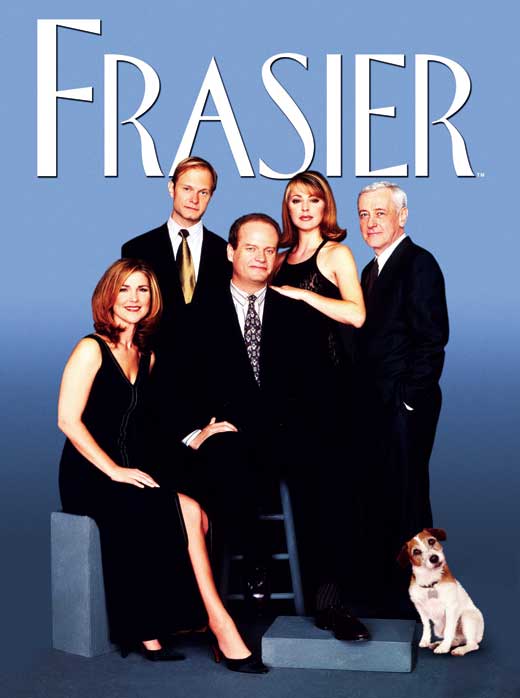
The comical version of the Hollywood psychiatrist, of course, is the one showcased by the award-winning TV sitcom, Frasier. Kelsey Grammer played the part of Frasier Crane, a supporting character, on Cheers from 1984 to 1993, and he continued the role in 263 episodes of Frasier, which ran 11 seasons from 1993 to 2004 (IMDb). More than most sitcoms of the 90s, Frasier refused to reduce its humor and sophistication to a lowest common denominator. The result was a quick-witted, often farcical show that played the professionalism and respectability of Frasier and Niles Crane against the screwball antics that their pompous natures created. Miscommunication, mistaken identities, and bruised egos made for numerous episodes that achieved comedy previously only seen in classic Hollywood films like The Philadelphia Story (1940) or It Happened One Night (1934).

A good example of the show’s screwball antics is the season two episode “The Innkeepers”. Frasier and Niles have dinner at a soon-to-be-closed restaurant and decide to buy the establishment to run together. On opening night, with all the restaurant critics in attendance, the Crane brothers walk in and out of the kitchen giving the head chef conflicting orders. When the cross-talk becomes too much the chef quits and the rest of the staff soon follows when they learn an immigration agent is in the building. Frasier and Niles co-opt Daphne, Roz, and Martin to help, but continued miscommunication only leads to an explosion, a fire alarm, sprinklers, and a car being driven through the restaurant’s wall.

Other episodes, such as “The Ski Lodge” (Season 5, Episode 14) and “The Matchmaker” (Season 2, Episode 3), are equally far-reaching in their use of screwball comedy and farce. The extent to which an episode could stretch some gags was dependent on how Frasier and Niles saw themselves to be respectable professionals. Pride in their credentials and accomplishments regularly led the characters to make poor decisions, which only caused further problems.

The fact that Frasier remained on the air for 11 seasons, and that Kelsey Grammer was able to negotiate $700,000 per-episode salary (TV Guide), is a testament to how popular the show and its characters were. For representations of psychiatrist on TV or in films, Frasier and Niles are among the best-known, and therefore have set a standard to which all other representations aim.

The psychiatrist, like any regularly-portrayed professional or authority figure, has developed an archetypal screen persona. Because authority can be portrayed in both serious and comical ways, there are two types of screen psychiatrists, which can be divided along the line of trustworthiness. When a shrink cannot be trusted he is a source of tension, suspense, and as a result appears in thrillers and mysteries. When a shrink can be trusted completely he appears in dramas and comedies. In unique films like Shutter Island this dichotomy is bridged by the transition of a character from distrustful to trusting. In all cases the screen presentation of a psychiatrist is dependent on the views of the other characters, and on how much they are trusted by them.

Works Cited

Arsenic and Old Lace. Dir. Frank Capra. Perf. Cary Grant, Priscilla Lane, Peter Lorre, and Raymond Massey. Warner Brothers, 1944. DVD.

Charlie Bartlett. Dir. Jon Poll. Perf. Anton Yelchin, Robert Downy Jr, Kat Dennings, and Hope Davis. MGM, 2007. DVD.

Fugitive. Dir. Andrew Davis. Perf. Harrison Ford. Warner Brothers, 1993. DVD.

Frasier. By David Angell, Peter Casey, and David Lee. Perf. Kelsey Grammer, Jane Leeves, David Hyde Pierce, Peri Gilpin, and John Mahoney. CBS, 1993. Web.

Good Will Hunting. Dir. Gus Van Sant. Perf. Robin Williams, Matt Damon, and Ben Affleck. Miramax, 1997. DVD.

His Girl Friday. Dir. Howard Hawks. Perf. Cary Grant, Rosalind Russell, and Ralph Bellamy. Columbia, 1940. DVD.

It Happened One Night. Dir. Frank Capra. Perf. Clark Gable and Claudette Colbert. Columbia, 1934. DVD.

IMDb. The Internet Movie Database. Frasier (TV Series 1993-2004). 1990. Web. 9 April 2012. <http://www.imdb.com/title/tt0106004/>.

Maurice. Dir. James Ivory. Perf. James Wilby, Hugh Grant, Rupert Graves, Denholm Elliot, and Ben Kingsley. Merchant Ivory, 1987. DVD.

Mr. & Mrs. Smith. Dir. Doug Liman. Perf. Brad Pitt. 20th Century Fox, 2005. DVD.

Ordinary People. Dir. Robert Redford. Perf. Donald Sutherland, Mary Tyler Moore, Judd Hirsch, and Timothy Hutton. Paramound, 1980. DVD.

Philadelphia Story, The. Dir. George Cukor. Perf. Cary Grant, Katharine Hepburn, and James Stewart. MGM, 1940. DVD.

Psycho. Dir. Alfred Hitchcock. Perf. Anthony Perkins, Vera Miles, John Gavin, Janet Leigh, Martin Balsam, and Simon Oakland. Paramount, 1960. DVD.

Raising Cain. Dir. Brian De Palma. Perf. John Lithgow. Universal, 1992. DVD.

Shutter Island. Dir. Martin Scorsese. Perf. Leonardo DiCaprio, Mark Ruffalo, Ben Kingsley, Max von Sydow, and Ted Levine. Paramount, 2010. DVD.

TV Guide. “Kelsey Grammer”. 2012. 9 April 2012. http://www.tvguide.com/celebrities/kelsey-grammer/160338

Zelig. Dir. Woody Allen. Perf. Woody Allen, Mia Farrow, and Patrick Horgan. Warner Brothers, 1983. DVD.

Thursday, March 8, 2012

Repression Across Genres

The Mystery, one of the most enduring story forms, requires a storyteller to withhold information from the audience. The act of concealing some facts can build suspense, and in some cases, when the lack of information goes unnoticed, the reveal can be an unexpected surprise. The relationship of suspense and surprise is also a key part of film editing. In the early days of Hollywood, silent filmmaker Edwin S. Porter, in his film The Great Train Robbery, used the surprise shooting of a passenger to shock the audience and to increase the story’s tension. Suspense was used extensively by Fritz Lang in M, his first sound feature, which used long silences interrupted by the whistle of Hans Beckert to alert the audience to the oncoming crimes. These “tricks” of editing were visual, temporal adaptations of the storytelling technique of repressing information to create mystery. Variations of repression lead to several storytelling genres, which rely on different combinations of knowledge and ignorance; the audience and all the characters can be kept in the dark (horror), the audience can be informed while a character is unaware (thriller), or the audience and most of the characters can be mislead by one or a few characters (mystery). While writers can use repression as a tool of storytelling they can also use it as a storytelling theme. Many novels and films have used the subject of repression to explore themes of trauma, delusion, or mental illness, and to explore the infinite possibility of dreams. As both a storytelling technique and a recurring theme, repression is a cornerstone of narrative.

Charlie Chaplin explored repression in a very obvious and comical way in the classic romance City Lights. The Tramp (Chaplin) falls in love with a blind flower girl who has mistaken him for a rich man. Instead of correcting her mistake, the Tramp attempts to continue the charade in order to win the girl’s heart. Along his journey to love the Tramp befriends a suicidal, drunk millionaire, who is completely ignorant of his alcohol-induced antics after he sobers up. The millionaire represses, for the sake of respectability, both his friendship with the Tramp and his suicidal urges. This very straightforward representation of repressed memory is a constant source of comedy in City Lights, and the character of the millionaire fills a narrative requirement as a steppingstone for the Tramp to achieve his goals.

The repression of memory can also be used as a narrative link in more serious ways, such as in Terry Gilliam’s The Fisher King. On the surface the film is a comedy, but, as the relationship between Jack (Jeff Bridges) and Perry (Robin Williams) evolves, a heartbreaking tragedy is revealed. Jack is a shock deejay whose career is ruined when he is blamed for a mass murder, and Perry is a homeless history professor who sees the world as a fantasy land of knights and damsels. Perry has repressed his understanding of reality to live a happier, care-free life, and his positive outlook appears to be an antidote to Jack’s depression. However, when the source of Perry’s repression is revealed to be the tragedy that Jack was responsible for, the film shows its true colours to be a drama about overcoming grief and guilt.

In both City Lights and The Fisher King the narrative is linked, thematically and structurally, to repression. Neither film withholds this fact from the audience, and both would be incomplete without the repression subplots. The split personality millionaire is necessary for much of the Tramp’s charade, and Perry’s fantastical outlook is key to Jack overcoming his selfish depression and guilt.

It is possible for stories to use repression as a key narrative link while withholding it from the audience. Shutter Island, based on the novel by Dennis Lehane and directed by Martin Scorsese, was established during its marketing campaign as the story of Teddy Daniels (Leonardo DiCaprio), a US Marshall, investigating the dark secrets of an asylum for the criminally insane. The ruse is sustained for the first two acts of the film until Daniels’ investigation leads him to discover that the island has no dark secrets and that he is not a US Marshall but is an inmate of the asylum. Shutter Island uses classic horror movie techniques to unsettle the audience and hint at the main character’s true nature, but the truth of his repressed memory is not fully revealed until the final act. As storytellers, Scorsese and editor Thelma Schoonmaker were able to use the fractured, mysterious nature of repressed memory to both mislead and inform the audience. The film includes many continuity errors, which are usually avoided, but because continuity errors can sometimes be legitimate mistakes they are a deceptive tool employed to unbalance the audience. The inclusion of several dream sequences further upsets any attempt to predict the story’s true nature by leaving portions of the film up to interpretation; being unable to declare whether a scene is real or not leaves the audience to question any conclusions they may have drawn from a particular moment.

The structure employed by Shutter Island of misleading the audience before revealing the repressed, “true” story of the film is one that is repeated in a variety of thrillers. Identity, with an Agatha Christie-style plot, and The Machinist, with Christian Bale’s haunting physical performance, are two thrillers that apply misdirection in their narratives. While these films successfully employ repression as a theme, and mystery as a structure, they leave the audience to discover the story and either guess or be surprised by the genre-conventional twist ending.

Guillermo Del Toro, with his Oscar-winning film Pan’s Labyrinth, created a fantasy film involving repression. Like 2001: A Space Odyssey, The Conversation, or Inception, Del Toro’s film can be interpreted in multiple ways because of the ambiguity of the film’s conclusion. Ofelia’s interactions with the fantasy world of the faun are isolated from other characters. In the finale Captain Vidal approaches Ofelia and the faun in the labyrinth, but when the angle of the camera switches to his point of view the faun has disappeared and Ofelia is talking to empty space. The ambiguity continues when Ofelia’s reunion with her parents and the faun is intercut with her death. Del Toro leaves it to the individuals in the audience to believe that Ofelia is actually speaking to the faun, which is invisible to the captain, or that the faun is only in her imagination. With this ambiguity the film includes a layer of mystery that would have been otherwise absent from the war, fantasy, or coming-of-age genres.


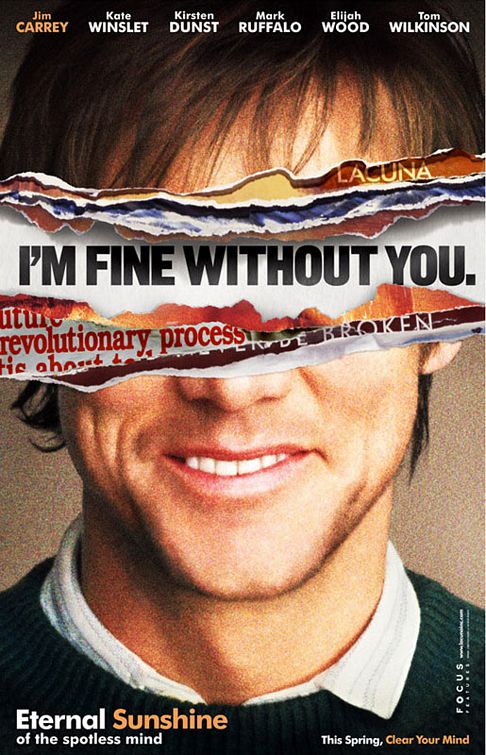
Repression of memory is the subject matter of Charlie Kaufman’s Oscar-winning Eternal Sunshine of the Spotless Mind. Like Pan’s Labyrinth it is a mixture of genres. Comedy, drama, and romance collide as Joel (Jim Carrey) and the memory of his ex-girlfriend Clementine (Kate Winslet) attempt to escape a memory-erasing treatment. Repression also figures heavily in John Patrick Shanley’s Doubt. In a key scene the mother of a boy who may have been abused by a priest admits that the abuse could be overlooked if it means her son is accepted and cared for. Both films include repression as a thematic subject, but in almost every other way, including tone and genre, they are wildly different films.

Although repression and misdirection are cornerstones of thrillers, there is no genre that remains untouched by the narrative power of repression. Whether it is a tragic story of repressed memories of sexual abuse (Mysterious Skin), a science-fiction exploration of humanity (Blade Runner), or a romantic pantomime (City Lights), the search for what has been repressed or hidden is a recurring component of film narrative. At times it is both the subject of a story and the trait of an audience that a storyteller can manipulate, which makes it a rare, archetypal narrative subject.

Works Cited

2001: A Space Odyssey. Dir. Stanley Kubrick. Perf. Kier Dullea, Gary Lockwood, William Sylvester, and Douglas Rain. Metro-Goldwyn-Mayer (MGM), 1968.

Blade Runner. Dir. Ridley Scott. Perf. Harrison Ford, Rutger Hauer, Sean Young, and Edward James Olmos. Warner Brothers, 1982.

City Lights. Dir. Charles Chaplin. Perf. Charles Chaplin, Virginia Cherrill, and Harry Myers. Charles Chaplin Productions, 1931.

The Conversation. Dir. Francis Ford Coppola. Perf. Gene Hackman, John Cazale, Allen Garfield, and Harrison Ford. American Zoetrope, 1974.

Doubt. Dir. John Patrick Shanley. Perf. Meryl Streep, Philip Seymour Hoffman, Amy Adams, and Viola Davis. Miramax, 2008.

The Fisher King. Dir. Terry Gilliam. Perf. Jeff Bridges and Robin Williams. Columbia Pictures, 1991.

The Great Train Robbery. Dir. Edwin S. Porter (uncredited). Perf. Gilbert M. “Bronco Billy” Anderson and A.C. Abadie. Edison Manufacturing Company, 1903.

Identity. Dir. James Mangold. Perf. John Cusack, Ray Liotta, Amanda Peet, John Hawkes, Alfred Molina, and John C. McGinley. Columbia Pictures, 2003.

Inception. Dir. Christopher Nolan. Perf. Leonardo DiCaprio, Joseph Gordon-Levitt, Ellen Page, Tom Hardy, Ken Watanabe, Cillian Murphy, Tom Berenger, Marion Cotillard, Pete Postlethwaite, and Michael Caine. Warner Brothers, 2010.

M. Dir. Fritz Lang. Perf. Peter Lorre and Otto Wernicke. Nero-Film AG, 1931.

The Machinist. Dir. Brad Anderson. Perf. Christian Bale, Jennifer Jason Leigh, Michael Ironside, and John Sharian. Filmax Group, 2004.

Mysterious Skin. Dir. Gregg Araki. Perf. Joseph Gordon-Levitt, Brady Corbet, and Elisabeth Shue. Desperate Pictures, 2004.

Pan’s Labyrinth. Dir. Guillermo del Toro. Perf. Ivana Baquero, Sergi Lopez, Maribel Verdu, and Doug Jones. Estudios Picasso, 2006.

Shutter Island. Dir. Martin Scorsese. Perf. Leonardo DiCaprio, Mark Ruffalo, Ben Kinsley, Max von Sydow, Michelle Williams, Emily Mortimer, Patricia Clarkson, Jackie Earle Haley, and Ted Levine. Paramount Pictures, 2010.

Monday, February 6, 2012

Interpreting Violence in a Film Family

Orson Welles called cinema “a ribbon of dream,” and many others have described film in similar ways (Rees). Freud wrote, “To interpret a dream is to specify its meaning, to replace it by something which takes its position in the concatenation of our psychic activities as a link of definite importance and value.” (Freud). By examining the relationships of characters in a narrative, and by considering how a theme such as violence affects the characters’ lives, it is possible to interpret new meanings from stories in the same way that Freud believed new meaning could be taken from dream analysis.

Narratives, particularly in Hollywood films, have a tendency to place murder in the close-quarters setting of a family. The experience of watching a film can be very intimate, and the goal of many filmmakers is to use that intimacy for their own purposes; wether for entertainment, shock, or philosophical discussion, the filmmaker achieves his goal of communicating with the audience by manipulating their relationship to characters on the screen. If the subject of a film is murder filmmakers will often place the crime, or the criminal, within an established and relatable setting such as a loving family or community. In this way the audience does not guard itself against the on-screen characters the same way they would if the film were set in an unpleasant location and populated by unappealing characters. When the barrier between audience and character is down it is possible for filmmakers like Alfred Hitchcock or David Lynch, and for novelists like Salley Vickers, to affect their audiences with deeper, more memorable characters.

The crime classic Fargo, made by Joel and Ethan Coen, establishes a story of murder and kidnapping in an unappealing environment (North Dakota in winter) that is filled with timid, violent, irrational, and foolish characters. Approximately 30 minutes into the film, Marge Gunderson is introduced. She and her husband Norm are the happy couple at the center of this unpleasant cast of characters. As a result she is the character that the audience relates to and cares about the most. When the climax of the film puts her in danger it creates a stronger suspense reaction because it is not only a dangerous situation, it is a dangerous situation for the character to whom the audience has become emotionally attached. This juxtaposition of relatable characters or environments with violence and murder is key to films such as Cape Fear, Domestic Disturbance, Red State, Psycho, and Blue Velvet.

Stories that place emphasis on the collision of family and violence must deal with related themes and resulting actions. In Woody Allen’s 2007 thriller Cassandra’s Dream, violence is introduced to a very normal family when two brothers are given the option to escape their financial problems by committing murder for a rich relative. This story is, on the surface, about the morality of murder, but it is also an examination of familial loyalty because of the characters involved. When a murderer has no real or surrogate family the story does not address these subordinate themes, but the presence of family in a story about violence dictates that themes such as guilt, secrecy, loyalty, and voyeurism must be addressed for the story to appear complete.

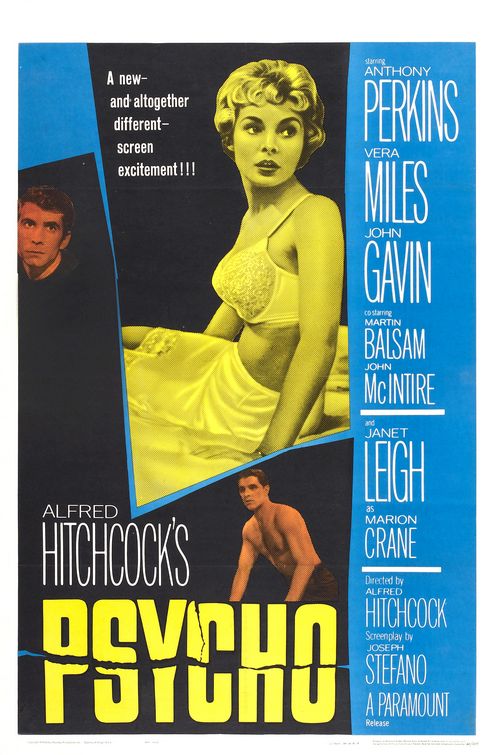
The confession, in both a religious and a legal sense, is a trope in dramatic fiction to satisfy a plot that involves a character’s guilt as a driving force. The first act of Psycho focuses on Marion Crane’s guilt as she attempts to flee Phoenix with stolen money. Until she confesses to Norman that she has “stepped into a private trap” and wants to return to Phoenix to extricate herself, Marion’s guilt is the driving force of the plot and suspense, and it is the defining feature of her character. Similarly, in Salley Vickers’ novel Where Three Roads Meet, an aspect of the character of Sigmund Freud is revealed when he confesses “I begin to feel I can’t take much more of this infernal pain.” This admission of weakness is not something he feels he can say to his wife or daughter (109). Tiresias tells him “It is itself a kindness to accept kindness,” which reflects his high opinion of the doctor (155). Freud is shown in these passages to be a man protecting his family because of his love of them and because of his guilt for keeping them at a distance. In both Psycho and the novel the inclusion of guilt is a result of the plot’s effect on the stories’ characters. Marion has stolen money, so she feels guilty as a result. Dr. Freud has isolated himself to continue listening to Tiresias, so he feels guilty for the effect on his family.

Like the guilt that drove Marion, curiosity drives Norman and several other characters in Psycho. Norman is interested in Marion and his curiosity leads him to invite her for dinner, which puts him into conflict with ‘Mother’ and leads to the first murder. Norman’s curiosity becomes voyeurism when he uses a hidden hole to spy on Marion as she undresses for her shower, and the surface emotion, curiosity, leads to the deeper, ‘Mother’ part of his psyche to commit the violent act of jealous murder. Curiosity also drives Marion’s sister to seek out Sam, leads both characters to investigate Marion’s disappearance, and sends Detective Arbogast into Norman’s house. When ‘Mother’ attacks Arbogast it is a panic defense to protect Norman from what Arbogast’s curiosity could uncover. Through this series of acts and violent responses, Hitchcock draws the audience ever-closer to Norman’s violent secret. As the driving force of the main characters, curiosity is the driving force of the film as a whole. Even Marion’s guilt during the first half is set off by an act of curiosity: could she get take the money and run?

In much the same way that Psycho is driven by curiosity, Blue Velvet is driven by suspicion. Jeffrey Beaumont becomes suspicious of his picturesque town when he discovers the severed ear on his way home. His suspicions lead him to the apartment of Dorothy Vallens, and he betrays his honest, boy-next-door exterior by sneaking into her apartment. Jeffrey’s suspicion leads him to witness Frank and Dorothy’s disturbing relationship and then to be discovered and chastised by Dorothy. Suspicion drives the paranoid actions of Frank Booth as he reacts to Jeffrey’s presence, and hope (an optimistic alternative to suspicion) drives Dorothy to continue fighting to get her husband and child released.

Neither Norman Bates or Jeffrey Beaumont appear to be violent at the start. Both are relatable and, like Marge in Fargo, are main characters whom the audience can care about. Starting with these relatable characters the two films successfully place the audience into situations of violence and danger without alienating viewers to the point of wanting to leave. This makes the unmasking of ‘Mother’ and Jeffrey’s journey down the rabbit hole all the more suspenseful because the audience is emotionally involved in the main characters and shares the curiosity and suspicion that drive their stories.

The intimate actions of curiosity and suspicion, voyeurism and surveillance, murder and sexual abuse, place the characters of Psycho and Blue Velvet in the position of being as intimate with each other as they would be with family, except in a far more extreme and traumatic form. Jeffrey’s journey into the dark world of Frank and Dorothy’s relationship coincides with the hospitalization of his own father. Until the final scene, when Jeffrey wakes up to see his father at the barbecue, Jeffrey is never the passive family member in any scene. His interactions with his mother and aunt are in passing, as he is heading to work or out into the night and they are sitting in front of the television. His interactions with Frank and Dorothy, however, place him in a passive role as he is told where to go and what to do by both characters. These two situations place Jeffrey at the extreme ends of a child’s existence. With his real family he is the adult caring for aging parents, and with Frank and Dorothy he is reduced to a toddler being ordered around and punished for bad behaviour.

In Psycho, Norman’s interactions with the visitors to his hotel are always interruptions to his relationship with ‘Mother.’ His time with Marion causes ‘Mother’ to lash out like a jealous lover, the trespassing Detective Arbogast triggers the panic defense of a parent protecting a child, and the investigations of Sam and Marion’s sister cause Norman to act out as the protective son. These responses are archetypal of family bonds, but the violent form that the responses take, combined with the fact that Norman and ‘Mother’ occupy the same body, makes them extreme, abnormal reactions to the curiosity that drives the story.

The collision of family dynamics and violence has been an endless mine of stories for books and Hollywood movies. Wether the family are homicidal maniacs (The Texas Chainsaw Massacre), vigilantes (The Boondock Saints), God-appointed avengers (Frailty), motel owners, or intimate strangers, they create ripples in the world around them that have caused the events central to many films and novels. By considering these ripples of cause and effect in a narrative it is possible to interpret meaning from stories in the same way that Freud took meaning from dreams.

Works Cited

Blue Velvet. Dir. David Lynch. Perf. Isabella Rossellini, Kyle MacLachlan, Dennis Hopper, and Laura Dern. MGM, 1986.
The Boondock Saints. Dir. Troy Duffy. Perf. Willem Dafoe, Sean Patrick Flanery, and Norman Reedus. 20th Century Fox, 1999.
Cape Fear. Dir. J. Lee Thompson. Perf. Gregory Peck and Robert Mitchum. Universal, 1962.
Cassandra’s Dream. Dir. Woody Allen. Perf. Colin Farrell, Ewan McGregor, and Tom Wilkinson. Weinstein Company, 2007.
Domestic Disturbance. Dir. Harold Becker. Perf. John Travolta, Vince Vaughn, Matthew O’Leary, and James Lashly. Paramount, 2001.
Fargo. Dir. Joel Coen and Ethan Coen. Perf. Frances McDormand, William H. Macy, Steve Buscemi, and Peter Stormare. 20th Century Fox, 1996.
Frailty. Dir. Bill Paxton. Perf. Bill Paxton, Matthew McConaughey, Powers Booth, Matt O’Leary, and Jeremy Sumpter. Lions Gate Films, 2001.
Freud, Sigmund. The Interpretation of Dreams. psychclassics.yorku.ca. York University, 1997. Web. 5 Feb. 2012.
Psycho. Dir. Alfred Hitchcock. Perf. Anthony Perkins, Vera Miles, John Gavin, Martin Balsam, and Janet Leigh. Universal, 1960.
Red State. Dir. Kevin Smith. Perf. Michael Parks, Melissa Leo, John Goodman, Michael Angarano, and Stephen Root. Smodcast, 2011.
Rees, Nigel. Cassell’s Movie Quotations. London: Cassell & Co, 2002. Print.
The Texas Chainsaw Massacre. Dir. Tobe Hooper. Perf. Marilyn Burns, Edwin Neal, and Allen Danziger. Bryanston Distributing, 1974.
Vickers, Salley. Where Three Roads Meet. Edinburgh: Canongate Books, 2007. Print.

Thursday, April 28, 2011

ARARAT

Atom Egoyan’s Ararat is a film more interested in historians than in history; the process of history – and its relationship to those who study it in the present – are at the heart of the story rather than the events of the Armenian genocide. The film-within-a-film (Edward Sorayan’s Ararat) takes the opposite approach and tells a strictly historical narrative of the events in question. By approaching the Armenian genocide in this way, Egoyan manages to start a debate and involve himself in it at the same time. The film is a search for “the truth,” but it understands that in history there is no such absolute.

If Egoyan had made Edward Sorayan’s Ararat as a feature film the result would have been, like Braveheart (1995) or Pearl Harbor (2001), a linear historical narrative. This would have had wider box-office potential, but it would also have lead to a public conversation where the Armenian genocide, and not Egoyan’s film, would be debated. To step away from the usual historical narrative and involve his film in the lives of the historians, Egoyan includes the genocide debate within his film. Questions of historical authenticity are addressed by characters that have the same concerns, and any question of the truth of the genocide claims are also debated in the film. This leaves the post-film debate to be about the merits of the film instead of about the merits of the history, which is why it is a successful historical film.

The focus put on the historians studying the Armenian genocide reflects the film’s theme of absolute truth, and how impossible it is to achieve. The historians, filmmakers, and other fictional characters created by Egoyan are all interested in “the truth.” The filmmakers treat it as if it were a commodity, something that could be purchased for the right price, when they hire Ani to be a historical consultant. David, the customs official, treats the truth as inevitable; he talks with Raffi, listens to his story, and waits for holes to appear and lies to be revealed. Martin, the lead actor, prepares for the role of Clarence Ussher by reading every scrap of evidence available. He appears fully confident in his mastery of “the truth,” and then puts on his costume and false moustache to play the role. Martin is emblematic of the amateur-historian who believes that the truth is accessible if enough information is gathered. Egoyan’s ensemble point of view of history makes it clear that “the truth” is never found because it is not a tangible object to be uncovered.

Egoyan’s film ends with the modest claim that the historical events presented have been substantiated. This post-script is inconclusive in terms of “the truth,” making it very appropriate for the film. Ararat presents both history and the historians who write it, and approaches the absolute truth of the Armenian genocide fully self-aware of how impossible a goal that is.